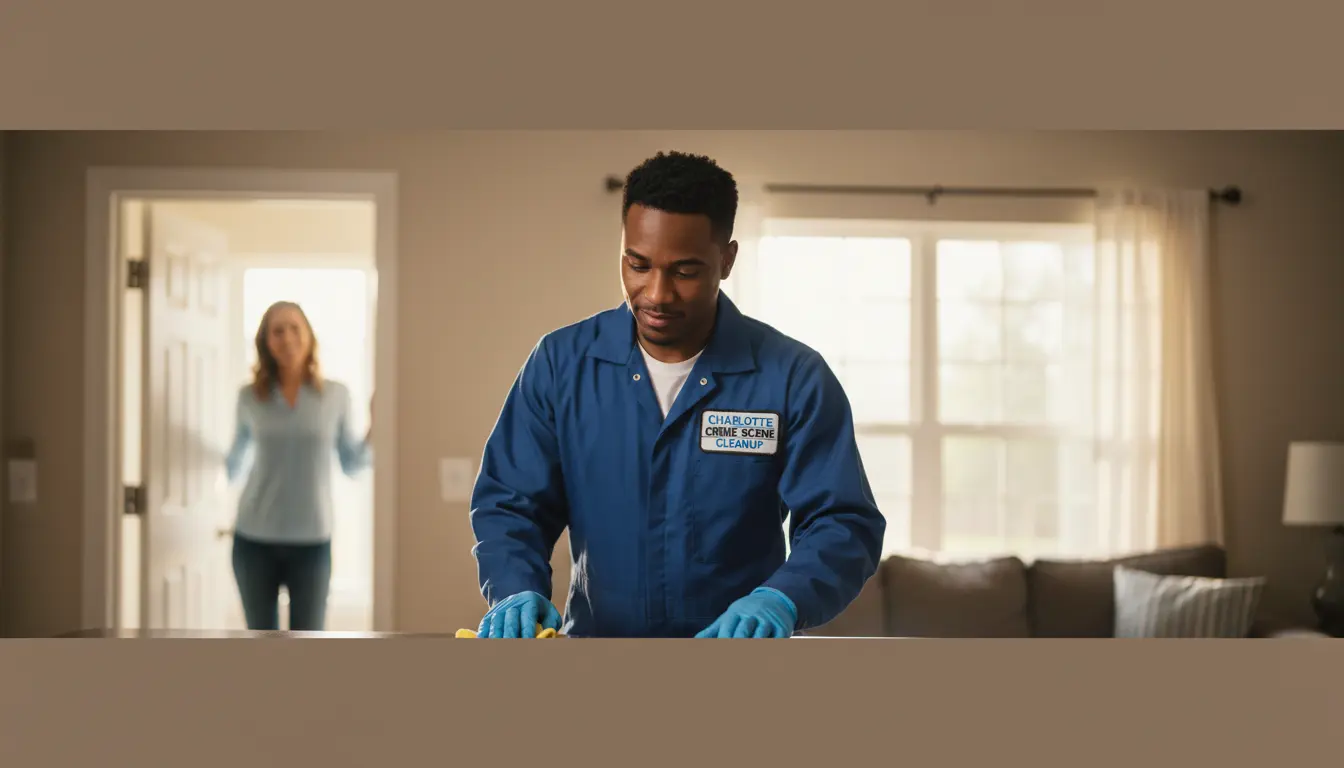
It’s a humid summer evening in Charlotte, NC, and the local police department has just finished processing a crime scene at a residential property. As the investigation concludes, the reality of the situation sets in for the property owner: the aftermath of a traumatic event requires professional crime scene cleanup to ensure the property is safe and free from biohazards. This is where Charlotte Crime Scene Cleanup comes in – a team of certified biohazard remediation experts dedicated to providing compassionate and discreet services to those in need. With their expertise, they can handle even the most challenging situations, including biohazard cleanup and trauma scene decontamination.
The importance of professional crime scene cleanup cannot be overstated. In Charlotte’s humid subtropical climate, biological contaminants can spread rapidly, posing significant health risks to anyone exposed. Moreover, the emotional toll of dealing with the aftermath of a traumatic event should not be underestimated. It’s crucial for property owners to understand that crime scene cleanup is not just about cleaning; it’s about restoring a property to a safe, habitable condition while respecting the dignity of those involved. For more information on the importance of emergency cleanup services, visit our page on why Charlotte businesses need emergency cleanup services.
As a premier service provider in Charlotte, NC, Charlotte Crime Scene Cleanup is committed to delivering high-quality, legally compliant services that meet the highest standards of the industry. Their team of experts undergoes rigorous training and adheres to protocols set by renowned organizations such as OSHA and ABRA. Whether it’s blood spill removal or homicide site cleaning, they approach each situation with the utmost care and professionalism, ensuring that every property is restored to its original condition.
Technical Process of Crime Scene Cleanup
The process of crime scene cleanup is meticulous and involves several critical steps. First, a thorough site assessment is conducted to identify all areas of contamination. This is followed by the establishment of containment zones to prevent the spread of biohazards. The next step involves the removal of biological matter, which is then followed by structural sanitization using EPA-approved disinfectants. Deodorization and ATP verification are also crucial components of the process, ensuring that the property is not only safe but also free from any lingering odors or pathogens. For a detailed understanding of the steps involved in crime scene cleanup, consider reading our 5 essential steps for crime scene cleanup in Charlotte, NC.
Given the humid climate of Charlotte, NC, and the potential for rapid biological growth, it’s essential to address local variables such as environmental conditions and high ambient humidity. Tools like HEPA air scrubbers and hydroxyl generators play a significant role in controlling moisture and eliminating airborne pathogens. The scientific reasoning behind using these tools lies in their ability to disrupt cellular structures of pathogens, thereby neutralizing them. This level of expertise ensures that every aspect of the cleanup process is handled with precision, whether it’s suicide cleanup response or accident scene sanitization.
Data Comparison Table
When considering the efficacy of professional biohazard remediation versus standard janitorial cleaning, several key factors come into play. The following table highlights the differences in pathogen eradication, legal/OSHA compliance, and structural penetration between these two approaches.
| Feature/Metric | Professional Biohazard Remediation | Standard Janitorial Cleaning |
|---|---|---|
| Pathogen Eradication | 99.99% efficacy with EPA-approved disinfectants | Varying efficacy, often less than 80% |
| Legal/OSHA Compliance | Full compliance with OSHA 29 CFR 1910.1030 | Potential for non-compliance due to lack of training |
| Structural Penetration | Includes assessment and treatment of porous materials | Typically surface cleaning only |
Source: ABRA Reference Guide
Expert Insights
Professional biohazard remediation experts often stress the importance of isolating affected HVAC zones to prevent the spread of airborne pathogens. Another critical aspect is the removal of porous materials, such as drywall or subflooring, which can harbor biohazards. Attempting to clean these surfaces without proper removal can lead to cross-contamination and severe health risks. Common mistakes property owners make include using household bleach to clean blood, which can create toxic gases, or failing to use proper PPE, exposing themselves to infectious diseases. For guidance on safely cleaning up after a death in your home, refer to our article on how to safely clean up after a death in your home.
Pricing
The cost of crime scene cleanup services can vary widely depending on several factors, including the extent of biological fluid penetration, the volume of hazardous waste, and the need for emergency response. Here are some key factors that influence pricing:
- Hourly rates per technician, which can range from $100 to $300 per hour depending on the service provider and the complexity of the situation.
- Regulated medical waste disposal fees, which are typically included in the overall cost of the service.
- The costs of specialized chemical agents and equipment necessary for the cleanup process.
It’s also worth noting that homeowners’ insurance frequently covers these costs, making professional crime scene cleanup a viable and necessary option for those in need. For more information on the services we offer and how they can be tailored to your needs, visit our services page.
Safety & Standards
Safety is paramount in the crime scene cleanup industry. Service providers must adhere to strict regulations and guidelines set by organizations such as OSHA and ABRA. The OSHA 29 CFR 1910.1030 Bloodborne Pathogens standard, for example, provides a framework for protecting workers from occupational exposure to bloodborne pathogens. Similarly, EPA-approved disinfectants are crucial for ensuring the elimination of pathogens. By following these standards and using the right equipment and chemicals, crime scene cleanup professionals can significantly reduce the risk of infection and ensure a safe environment for future occupants. Learn more about our commitment to safety and standards on our about us page.
FAQ Section
What is the difference between crime scene cleanup and standard cleaning services?
Crime scene cleanup involves the removal and disposal of biohazardous materials, which can pose serious health risks if not handled properly. Standard cleaning services, on the other hand, are designed for everyday cleaning and do not address the unique challenges of biohazard remediation. For a deeper understanding of the top signs you need professional trauma cleanup services, consider our article on top signs you need professional trauma cleanup services.
How long does the crime scene cleanup process typically take?
The duration of the crime scene cleanup process can vary significantly depending on the extent of the contamination, the size of the property, and the complexity of the situation. In some cases, the process can be completed within a few hours, while more extensive situations may require several days or even weeks. Our team at Charlotte Crime Scene Cleanup is dedicated to providing efficient and thorough services, ensuring that your property is restored to a safe condition as quickly as possible.
Is crime scene cleanup covered by insurance?
In many cases, yes, crime scene cleanup is covered by homeowners’ insurance. It’s essential to check your policy to understand what is covered and to what extent. Our team works closely with insurance companies to ensure a smooth and stress-free process for our clients. For local expert crime scene cleaning tips for NC residents, visit our local expert crime scene cleaning tips for NC residents page.
What kind of training do crime scene cleanup professionals receive?
Professionals in the crime scene cleanup industry undergo rigorous training that includes learning about bloodborne pathogens, personal protective equipment (PPE), and the proper use of disinfectants and cleaning equipment. They are also trained in how to handle sensitive situations with compassion and discretion. At Charlotte Crime Scene Cleanup, our team is committed to ongoing education and training to ensure we provide the highest level of service.
Professional Biohazard Remediation in Charlotte, NC
In conclusion, the importance of professional crime scene cleanup in Charlotte, NC, cannot be overstated. It’s not just about cleaning a property; it’s about restoring it to a safe, habitable condition while respecting the dignity of those involved. At Charlotte Crime Scene Cleanup, we understand the challenges and complexities of biohazard remediation and are committed to providing compassionate, discreet, and highly professional services. Whether you’re dealing with the aftermath of a traumatic event or require guidance on how to navigate the process, our team is here to help. Contact us today to learn more about our services and how we can assist you in your time of need. Visit our contact us page for more information.
As you consider the services of a crime scene cleanup company, remember that the health, safety, and well-being of you and your loved ones are paramount. Don’t hesitate to reach out to professionals who can handle the situation with the care, expertise, and compassion it deserves. At Charlotte Crime Scene Cleanup, we are dedicated to serving the Charlotte, NC, community with the highest level of integrity, respect, and professionalism. For more information on our areas of service, visit our areas we serve page.
In the aftermath of a traumatic event, it’s essential to prioritize the restoration of your property and the well-being of those affected. With the right support and guidance, you can navigate this challenging time with dignity and hope for the future. At Charlotte Crime Scene Cleanup, we are here to support you every step of the way, providing not just a service, but a path towards healing and recovery. For additional resources and information, visit our blog page.