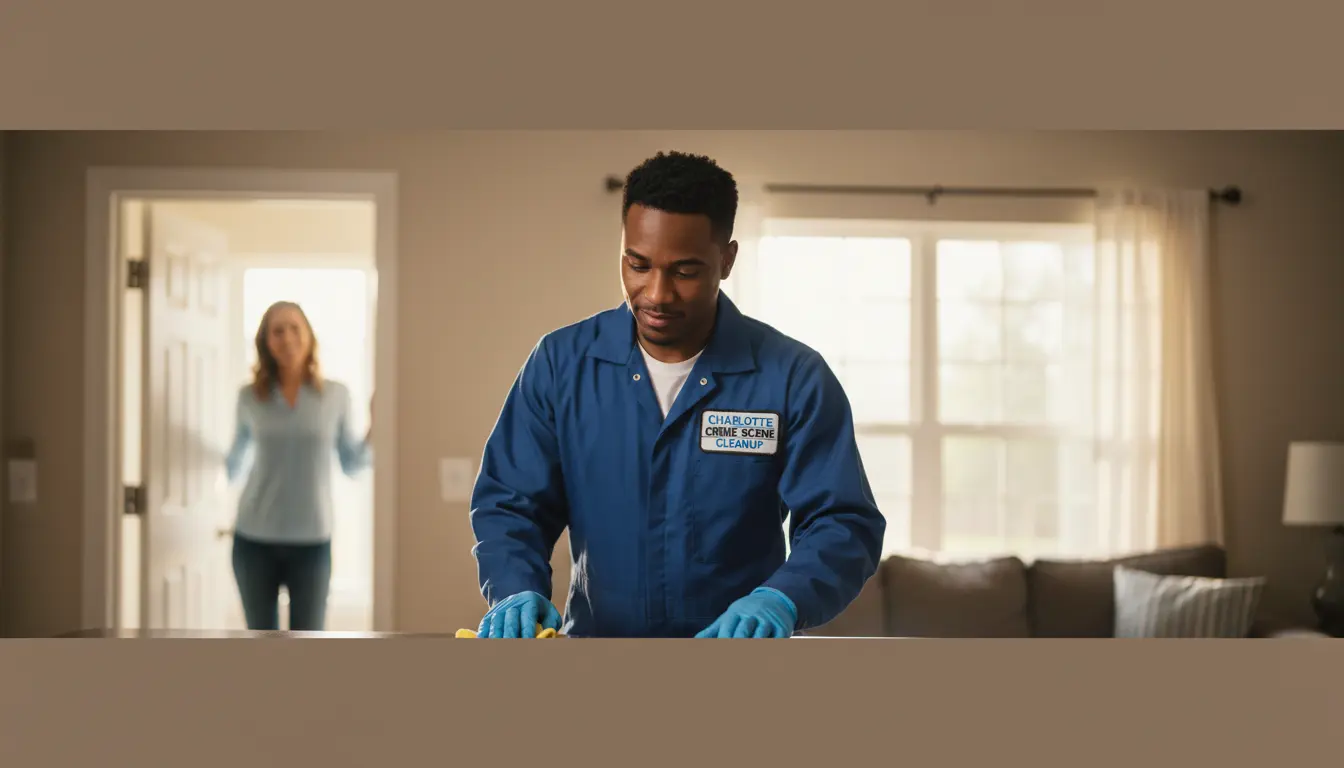
Dealing with the aftermath of a crime scene can be overwhelming, especially in a bustling city like Charlotte, NC, where life moves fast. From the historic neighborhoods of Dilworth to the modern skyline of Uptown, unexpected tragedies can strike anywhere. As a trusted local provider, Charlotte Crime Scene Cleanup understands the emotional and physical toll this takes on families and communities. Our team is here to handle the biohazards and restoration with care and expertise, ensuring your property is safe and sanitized.
In this guide, we’ll walk you through the five essential steps for effective crime scene cleanup. Whether you’re a homeowner in South End or a property manager in NoDa, these steps highlight why professional intervention is crucial. Remember, attempting DIY cleanup can expose you to serious health risks—leave it to the pros. For more on our biohazard cleanup services, keep reading.
Step 1: Secure the Area and Ensure Safety
The first and most critical step in any crime scene cleanup is securing the area to prevent further contamination or accidental exposure. In Charlotte’s variable weather, from humid summers to occasional storms, outdoor elements can complicate matters if the scene isn’t isolated properly.
Assess Hazards Immediately
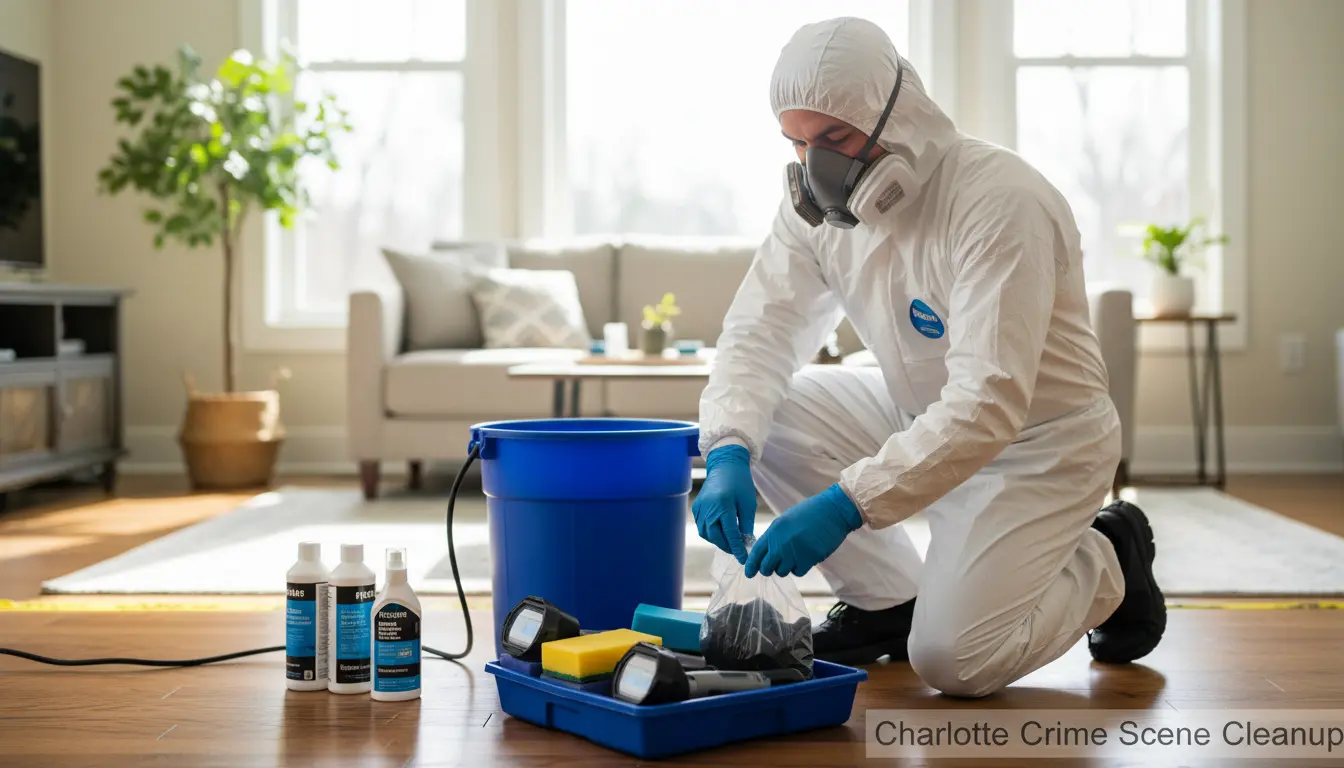
Upon arrival, our trained technicians don full personal protective equipment (PPE), including suits, gloves, masks, and goggles. We evaluate the scene for bloodborne pathogens, chemical residues, or structural damage. For instance, in a high-traffic area like the Dilworth neighborhood, we cordon off the site to keep curious onlookers or neighbors safe.
Practical Tip: Evacuate and Ventilate
If you’re the first on the scene, evacuate non-essential personnel and ventilate the space by opening windows if safe to do so. Avoid touching anything until professionals arrive. In Charlotte, where pollen and allergens are year-round concerns, proper ventilation prevents cross-contamination with environmental irritants.
This step sets the foundation for a safe cleanup, minimizing risks to everyone involved.
Step 2: Document the Scene Thoroughly
Documentation isn’t just a legal requirement—it’s essential for insurance claims and restoring the property accurately. Charlotte Crime Scene Cleanup uses high-resolution photos and detailed notes to capture every detail before cleanup begins.
Coordinate with Authorities
In North Carolina, law enforcement must release the scene before cleanup can proceed. We work closely with Charlotte-Mecklenburg Police Department protocols to ensure compliance. This includes logging biohazard locations and preserving evidence if needed.
Actionable Advice for Property Owners
Keep a log of all communications and photos yourself, but never disturb the scene. For properties in areas like Plaza Midwood, where historic preservation might be a factor, detailed documentation helps with any restoration matching original aesthetics.
By thoroughly documenting, we ensure transparency and efficiency, which is vital in Charlotte’s regulated environment.
Step 3: Remove and Dispose of Biohazardous Materials
Biohazards like blood, bodily fluids, and tissues pose severe health risks, including exposure to diseases such as hepatitis or HIV. This step requires specialized equipment and adherence to OSHA and EPA guidelines.
Use Professional-Grade Tools
Our team employs industrial vacuums with HEPA filters, enzymatic cleaners, and sealed containers for waste. In a city like Charlotte, with its mix of residential and commercial spaces, we adapt our methods—whether it’s a small apartment in Uptown or a larger site in Ballantyne.
Local Insight: Charlotte’s Waste Regulations
North Carolina has strict rules for biohazard disposal, routing waste to certified facilities outside Mecklenburg County. We handle all permits and transport, sparing you the hassle. For more details on handling biohazard cleanup services in sensitive areas, explore our resources.
Practical tip: Never use household cleaners on biohazards; they can spread contaminants. Opt for pros who know Charlotte’s local disposal pathways.
Step 4: Deep Clean and Disinfect Surfaces
Once biohazards are removed, deep cleaning restores the space to a sanitary state. This involves scrubbing porous and non-porous surfaces to eliminate odors and residues.
Choose the Right Disinfectants
We use hospital-grade disinfectants effective against a broad spectrum of pathogens. In humid Charlotte climates, moisture control is key to prevent mold growth post-cleanup.
Tips for Post-Cleanup Maintenance
After our work, we recommend sealing porous materials like carpets or drywall if heavily contaminated. For homes in the Elizabeth neighborhood, with its charming older builds, we focus on preserving structural integrity while ensuring hygiene.
This step often overlaps with odor neutralization using ozone generators or activated carbon, leaving your property fresh and livable.
Step 5: Restore and Rebuild the Space
The final step is restoration, making the area functional again. Charlotte Crime Scene Cleanup partners with local contractors for repairs, from painting to flooring replacement.
Inspect for Hidden Damage
We conduct a final walkthrough to check for overlooked issues, like HVAC contamination. In Charlotte’s growing suburbs like University City, quick restoration minimizes downtime for rentals or businesses.
Actionable Advice: Insurance Navigation
Document everything for claims—our reports streamline this. If your property is in the NoDa arts district, we can coordinate with preservation experts to match original designs.
Restoration brings closure, transforming tragedy into renewal.
FAQ: Common Questions About Crime Scene Cleanup in Charlotte
How Long Does Crime Scene Cleanup Take in Charlotte?
Timelines vary from a few hours for small scenes to several days for extensive ones. Factors like location—such as traffic in Uptown—can influence this. Charlotte Crime Scene Cleanup prioritizes urgency while maintaining safety.
Is Crime Scene Cleanup Covered by Insurance in NC?
Yes, most homeowner and commercial policies cover it under biohazard or trauma provisions. We assist with claims and provide detailed invoices.
Do I Need to Be Present During Cleanup?
No, but we recommend a point of contact. Our compassionate team handles everything discreetly, respecting your privacy in close-knit Charlotte communities.
What Makes Charlotte Crime Scene Cleanup Different?
Our local knowledge, 24/7 availability, and IICRC certification set us apart. Serving areas like Dilworth ensures rapid response tailored to Charlotte’s unique needs.
Can I Clean a Crime Scene Myself?
Absolutely not—it’s dangerous and often illegal without certification. Contact us at (704) 471-4227 for professional help.
Conclusion: Trust Charlotte Crime Scene Cleanup for Peace of Mind
Navigating crime scene cleanup in Charlotte, NC, requires expertise, compassion, and precision. By following these five essential steps—securing the area, documenting thoroughly, removing biohazards, deep cleaning, and restoring—you can ensure safety and recovery. But why risk it alone? Charlotte Crime Scene Cleanup is your local partner, ready to handle every detail with care.
Whether in the heart of Dilworth or across the Queen City, we’re here 24/7. Call us today at (704) 471-4227 or visit our biohazard cleanup services page to learn more. Restore your space and reclaim your peace—contact us now.