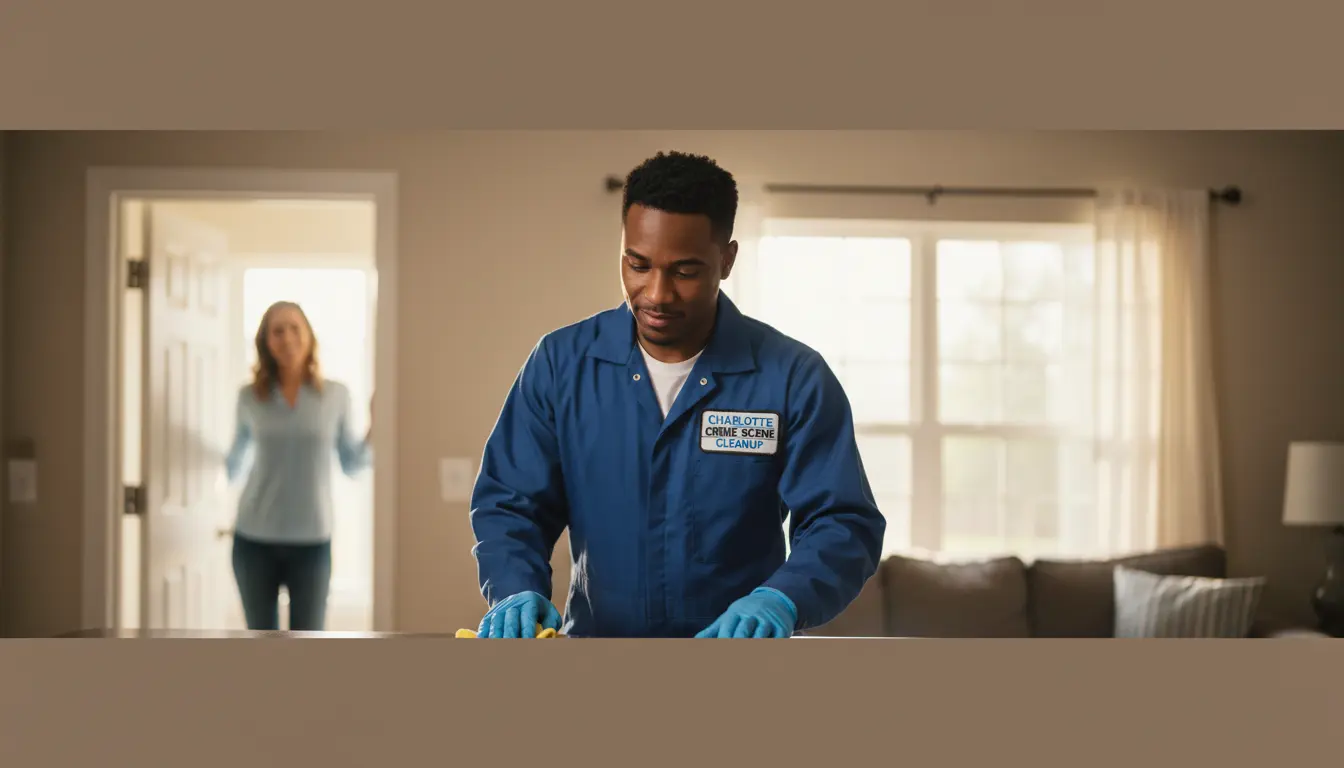
Dealing with a crime scene is one of the most distressing situations anyone can face. As a resident of North Carolina, particularly in the bustling city of Charlotte, you might find yourself needing guidance on how to handle the aftermath safely and effectively. At Charlotte Crime Scene Cleanup, we understand the emotional and physical toll this takes. Our team of certified professionals serves the Charlotte area, providing compassionate and thorough cleanup services to restore your space to a safe, livable condition.
In this comprehensive guide, we’ll share expert tips on crime scene cleaning, drawing from our years of experience in University City and surrounding neighborhoods. Whether it’s a traumatic incident or an unattended death, knowing the right steps can make all the difference. Remember, while these tips are helpful, professional intervention is crucial—contact us at (704) 471-4227 for immediate support.
Understanding the Risks of Crime Scene Cleanup
Crime scenes aren’t just about visible mess; they involve biohazards that pose serious health risks. Blood, bodily fluids, and other contaminants can spread diseases like hepatitis or HIV if not handled properly. In Charlotte’s humid climate, these hazards can linger and multiply, making swift action essential.
Why DIY Cleanup Is Dangerous
Attempting to clean a crime scene yourself might seem cost-effective, but it’s fraught with dangers. Without proper protective gear and knowledge, you could expose yourself to pathogens. North Carolina regulations, enforced by the state’s Department of Health and Human Services, require specific protocols for biohazard disposal. Skipping these can lead to fines or health issues.
For instance, in areas like Huntersville, where residential communities are dense, improper cleanup can affect neighbors. Our Biohazard Cleanup Services ensure compliance and safety, using EPA-approved disinfectants to neutralize threats.
Essential Safety Precautions Before Starting
Safety first—always prioritize your well-being. Before touching anything, assess the scene and call professionals if it’s overwhelming.
Gear Up with Proper PPE
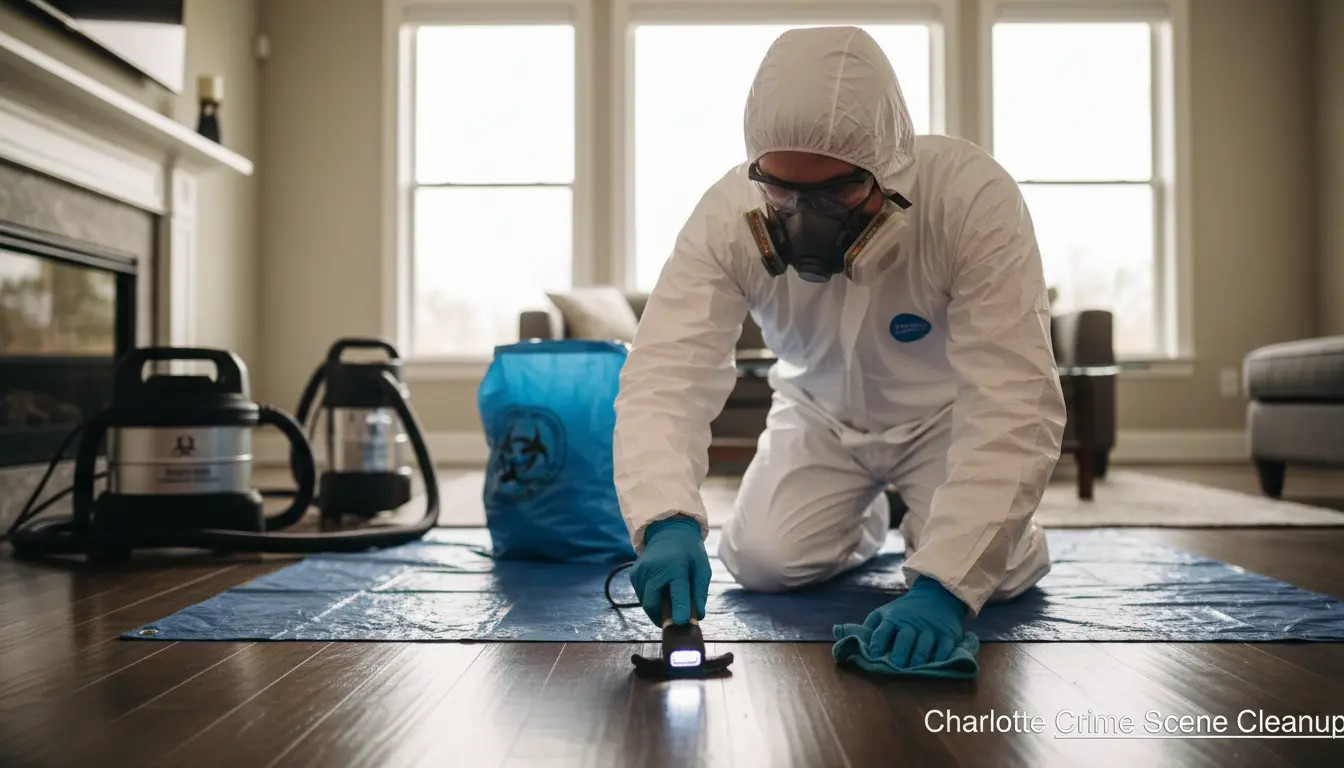
Personal Protective Equipment (PPE) is non-negotiable. Wear gloves, masks (N95 or higher), goggles, and full-body suits to shield against airborne particles and splashes. In Charlotte’s variable weather, ensure your gear is breathable yet protective. Source PPE from reputable suppliers, and never reuse contaminated items.
Secure the Area
Isolate the scene to prevent accidental exposure. Use caution tape or barriers, especially in multi-family homes common in Dilworth. Notify local authorities if required, as NC law mandates reporting certain incidents.
Step-by-Step Cleaning Process
Follow these structured steps for effective cleanup. While we recommend leaving it to experts, this overview empowers you to understand the process.
Step 1: Initial Assessment and Removal of Large Debris
Begin by ventilating the area—open windows and use fans to disperse fumes. Remove large items like bedding or furniture that are heavily soiled; these often need professional Hazardous Waste Disposal to comply with environmental standards.
In Charlotte’s urban settings, such as Matthews, space constraints might complicate this. Bag debris in biohazard-marked red bags and seal them tightly.
Step 2: Thorough Cleaning of Surfaces
Use absorbent materials like cat litter or commercial biohazard powders to soak up fluids. Scrub surfaces with a bleach solution (1:10 ratio with water) or enzymatic cleaners designed for organic matter. Pay attention to porous materials like carpets, which may require extraction equipment.
For trauma-related scenes, our Trauma Scene Decontamination team uses specialized tools to reach hidden areas, preventing mold growth in NC’s damp environment.
Step 3: Disinfection and Odor Control
Disinfection is key to eliminating 99.9% of pathogens. Apply hospital-grade disinfectants and let them dwell for the recommended time—usually 10 minutes. For odors, which can persist in enclosed spaces, use ozone generators or activated charcoal.
In sensitive cases like suicide cleanup, our Full Disinfection Process includes fogging techniques to ensure every corner is sanitized.
Step 4: Final Inspection and Waste Disposal
Inspect for residue using blacklight for traces of fluids. Dispose of waste at approved facilities—never in regular trash. In North Carolina, biohazard waste must go to licensed haulers; we partner with local ones for seamless service.
Local Considerations for Charlotte Residents
Charlotte’s unique landscape influences cleanup strategies. The city’s mix of historic homes in Davidson and modern apartments requires tailored approaches. High humidity accelerates decomposition, so act fast. Additionally, Mecklenburg County’s waste regulations are strict—always verify with local guidelines.
If you’re in a rental, notify your landlord immediately to avoid liability. Our team has experience navigating these local nuances, ensuring your property is restored without delays.
Common Mistakes to Avoid
Even with good intentions, errors happen. Don’t use household cleaners on biohazards—they’re ineffective and can spread contaminants. Avoid power-washing, which aerosolizes particles. And never ignore HVAC systems; ducts can harbor residues, requiring professional venting.
In Charlotte’s growing suburbs, like those around University City, overlooking these can lead to prolonged exposure for families.
When to Call Professionals
If the scene involves heavy blood loss, multiple rooms, or emotional distress, call experts right away. At Charlotte Crime Scene Cleanup, we respond 24/7, compassionately handling everything from initial response to final restoration. Our IICRC-certified technicians use state-of-the-art equipment for unmatched results.
Serving all of NC but focused on Charlotte, we’re your trusted partner. Dial (704) 471-4227 for a free consultation.
FAQ: Crime Scene Cleaning in North Carolina
1. How long does crime scene cleanup take?
It varies by scene size—small areas might take 4-8 hours, while larger ones require days. Our team assesses on-site for accurate timelines.
2. Is crime scene cleanup covered by insurance?
Often yes, through homeowners or liability policies. We work with insurers in Charlotte to streamline claims.
3. What certifications should a cleanup company have?
Look for OSHA, EPA, and IICRC certifications. Charlotte Crime Scene Cleanup meets all NC standards.
4. Can I clean minor blood spills myself?
For small, fresh spills, yes—but use proper PPE and cleaners. For anything suspicious, call professionals to avoid risks.
5. How do I dispose of biohazard waste in NC?
Use licensed services only. We handle transport and disposal per state regs.
Conclusion: Restore Peace with Expert Help
Navigating crime scene cleanup in North Carolina demands knowledge, caution, and often professional aid. Armed with these tips, you’re better prepared, but remember: the safest choice is entrusting it to specialists like Charlotte Crime Scene Cleanup. We bring empathy, efficiency, and expertise to every job, helping Charlotte residents reclaim their spaces.
Don’t face this alone—reach out today at (704) 471-4227 or visit our site for more resources. Your safety and serenity are our priority.